
As America approaches its 250th anniversary of the Declaration of Independence, our attention is naturally drawn to the strange, forlorn, brilliant man who drafted that document, Thomas Jefferson. Jefferson prepared the document, he said, not as a purely original composition, but as a reflection of the American mind. Yet it was Jefferson’s task to represent that popular mind, and in doing so to give it lasting shape and influence.
Jefferson was undoubtedly the most controversial of the American founders, and in recent decades, it seems that our public culture has been trying to move away from him. Ask educated Americans whom they admire most among the founders, and the usual answer is “Washington.” Washington is the safe choice.
The immensely-successful Broadway play, Hamilton, was quite blatantly an effort to elevate Alexander Hamilton over Jefferson. So, too, the 2008 HBO miniseries on John Adams highlighted the life of the New Englander and Federalist who was Jefferson’s presidential rival. Ben Franklin, too, seems to outperform Jefferson because of his entrepreneurial inventiveness and embodiment of the characteristics of the self-made man.
Even so, it is the Virginia slaveowner, Jefferson, who understood and conveyed, in the view of Abraham Lincoln, the true spirit of the American Revolution. Of course, Jefferson played no role in the Constitution, but it is the Declaration—not the Constitution—that is 250 years old this year.
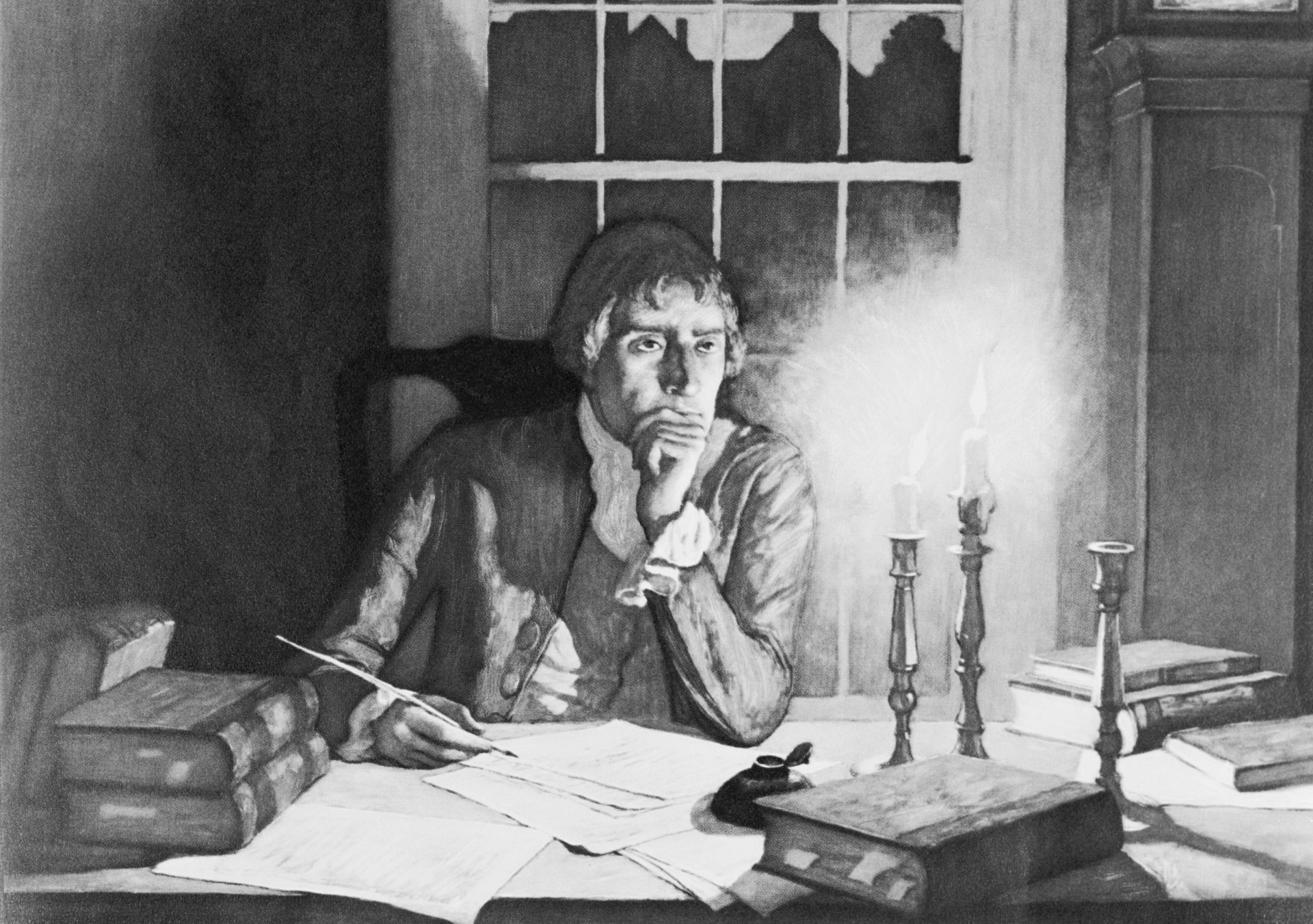
Painting by N.C. Wyeth of Thomas Jefferson drafting the Declaration of Independence. (Bettmann/Getty Images)
What is the relationship of the Declaration to the Constitution? One might say the Declaration reflected the philosophy of the Revolution, and the Constitution its legal formulation. The Declaration is the spirit, the Constitution the letter. And, of course, when the Constitution is silent or ambiguous, where do we turn for interpretive guidance? To the Declaration, of course.
Lincoln illustrated the relationship of the Declaration to the Constitution by invoking the biblical image of “apples of gold in pictures of silver.” The Declaration, Lincoln said, is the golden apple; the Constitution, the picture of silver framed around it. “The picture was made for the apple,” Lincoln noted, “not the apple for the picture.”
So let us turn with fresh eyes to Jefferson’s Declaration to see how it forms the core of the American idea, indeed to see how Jefferson can be said, through this centuries-old document, to have made America.
We can do this, oddly enough, by reviewing the common contemporary critique of Jefferson—a sort of “deconstruction” of Jefferson—and providing an answer to that critique. Our deconstruction of the deconstruction of Jefferson will illuminate what makes Jefferson’s Declaration so relevant and profound.
“All men are created equal,” the Declaration of Independence begins, and “endowed by their Creator with certain unalienable” rights. These might be the most influential words ever written this side of the Bible.
The Constitution, ratified a little more than a decade later, was guided by these words. Subsequent amendments, including the Fourteenth Amendment, passed after the Civil War, granting “equal rights under the law,” seem, for all their grandeur, to be restatements of the equality principle in Jefferson’s Declaration.
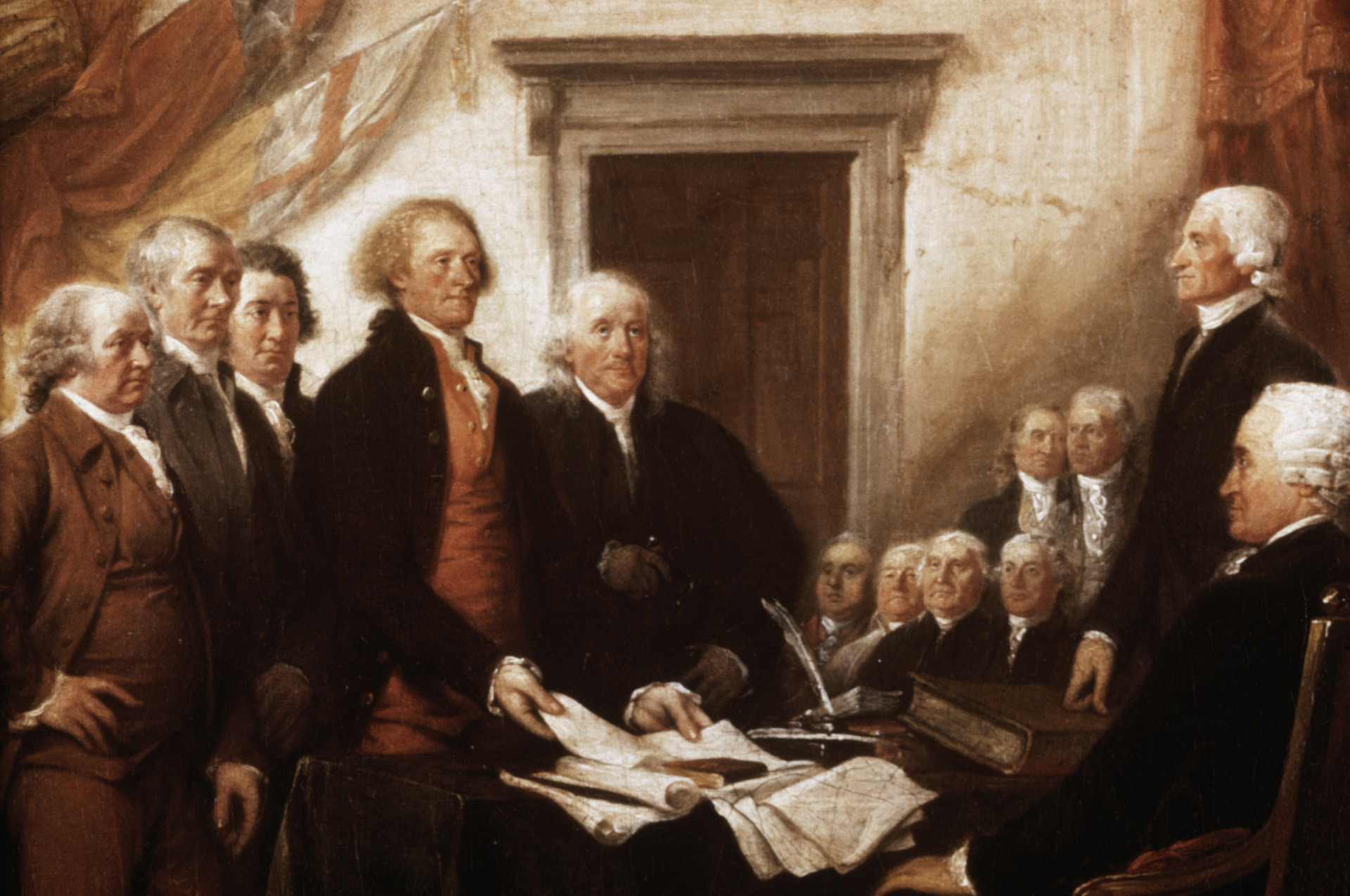
Detail of John Trumbell’s painting titled “Declaration of Independence” showing Thomas Jefferson, center, presenting the Declaration of Independence to the Continental Congress. (Getty Images)
Yet according to the conventional wisdom—taught these days in most schools and colleges—Jefferson embodies the contradictions of the founders. Indeed, progressives say, he was the worst of them, the most hypocritical, because the very man who insisted that all men are created equal not only permitted slavery but also himself owned slaves.
Did Jefferson not see the glaring contradiction between his principles and his practices, between the principles and practices of the infant American nation? According to Chief Justice Roger Taney, who authored the notorious 1857 Dred Scott decision affirming slavery in the territories, neither Jefferson nor the other founders could have seriously meant that “all men are created equal.”
They didn’t act on the principle, so they couldn’t have believed it. Modern progressive jurists such as Thurgood Marhsall, as well as historians such as John Hope Franklin, have, again with an irony that should not go unnoticed, adopted the Taney view. In Franklin’s words, the founders “betrayed the ideals to which they gave lip service.” They wrote “eloquently at one moment for the brotherhood of man and in the next moment denied it to their black brothers.”
No defense of Jefferson or the American founding is possible that agrees with this assessment. I’m not here trying to vindicate Jefferson against the charge that he owned slaves. Conservatives customarily minimize Jefferson’s conduct by saying he was a “man of his time.” But there were many people in Jefferson’s time, even in the South, who refused to hold slaves because they objected to slavery. Washington, another Virginian, did have slaves but freed them on his death, while Jefferson did not.
My goal here is to make a defense not of Jefferson the man but of Jefferson’s Declaration, and of the decision of the founders to allow slavery to endure despite the Declaration’s express proclamation of human equality. How can Jefferson and the founding be vindicated against the charge of base hypocrisy? If this can be done, the whole progressive critique of the founding collapses.
For the answer, let’s look again at Jefferson’s Declaration and what comes almost immediately after the statement “all men are created equal”—that governments derive their legitimacy from the “consent of the governed.” This is the democracy principle, often downplayed or overlooked, and yet it is no less important, no less foundational, than the equality principle.
With this in mind, let’s turn to the practical choice faced by the founders. Progressives say they should have outlawed slavery in the original Constitution. Yet slavery was legal in all the states that sent representatives to Philadelphia in 1789.
How could these representatives outlaw slavery without the consent of the people in their states? Were they expected to do so by overriding popular consent? In that case, they would be overthrowing democracy itself, before it was even introduced as the bedrock of the new Constitution!
Furthermore, as everyone in Philadelphia knew at the time, many states would not have joined a union that forbade slavery at the outset. Perhaps a few would have done so, but no more. Had those who opposed slavery held firm on the issue, the union would have consisted of a handful of states, or it would have remained a utopian idea affirmed by a group of high-minded founders—but they would be founders of nothing.
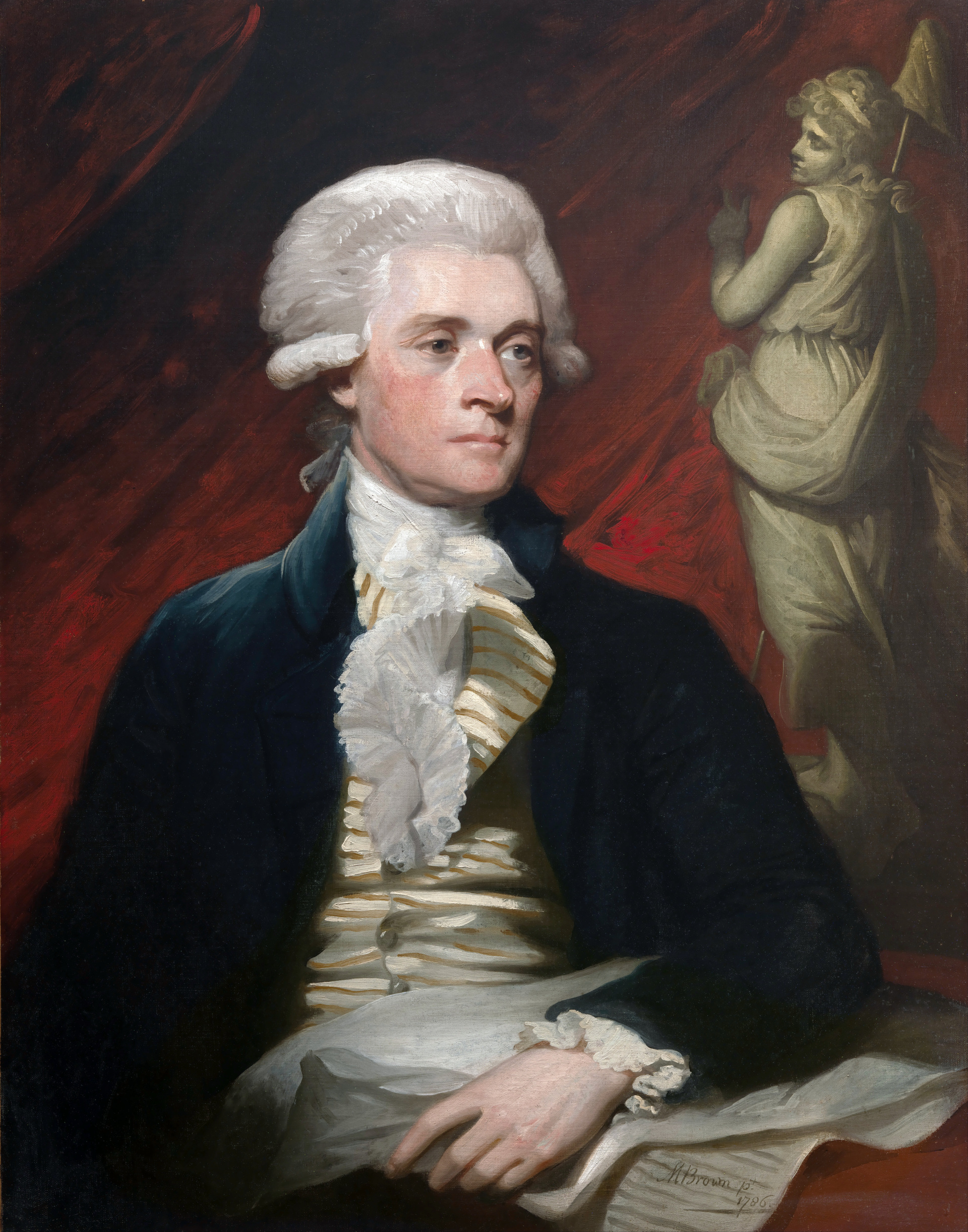
Thomas Jefferson painting by Mather Brown, 1786, in the National Portrait Gallery in Washington, DC. (VCG Wilson/Corbis via Getty Images)
As Jefferson himself said about slavery, “We have a wolf by the ear, and we can neither hold him or safely let him go.” It is not reasonable—in fact it is downright obtuse—to ask of statesmen to do what they manifestly cannot do. It is only reasonable to ask them to make the best choices available to them under the circumstances—to hold the wolf, in Jefferson’s own terms, until he can safely be let go.
In Lincoln’s view, the American founders did just that. They temporarily allowed slavery in practice, while constructing a framework based on anti-slavery principles. In Lincoln’s words, the founders “declared the right, so that the enforcement of it might follow as fast as circumstances would permit.”
Lincoln’s interpretation of Jefferson and the founding was echoed by runaway slave and abolitionist leader Frederick Douglass. Slavery, Douglass said, was merely the scaffolding for the new Constitution, allowed provisionally by Jefferson and the other founders, but with a clear objective that it would be taken down once the edifice no longer needed it. Martin Luther King Jr. echoed these same sentiments in his famous “I Have a Dream” speech.
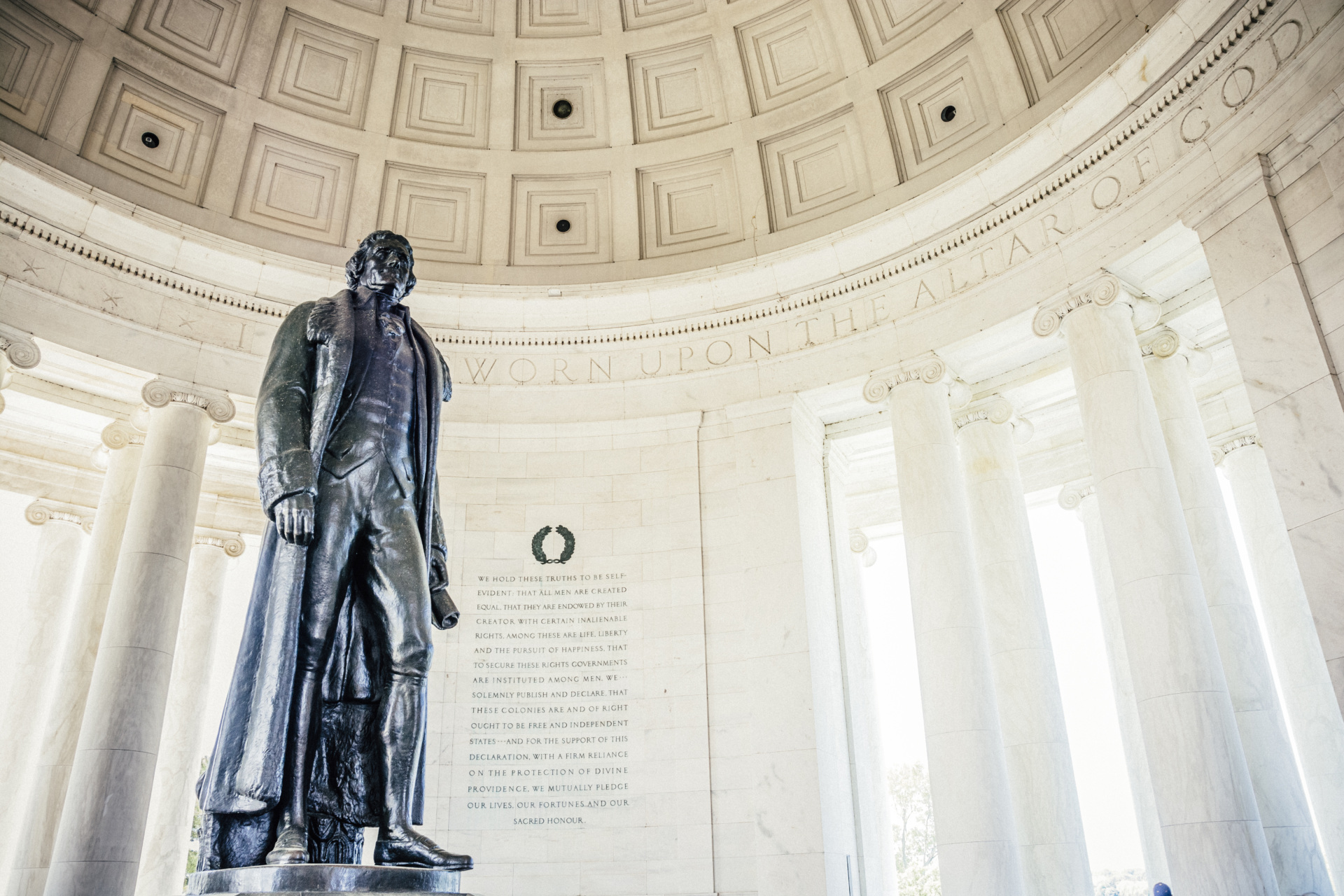
The Jefferson Memorial in Washington, DC. (Getty Images)
That Jefferson didn’t live up to his highest values is not in dispute. But to deny his greatness and his indispensable role in the creation of the nation is both narrow-minded and foolish. His Declaration undergirded the Civil War and the Civil Rights Movement, and to this day it remains the anchor of our rights and our constitutional democracy.
Lincoln, Douglass, and King all understood that Jefferson created the pathway to reconcile human equality with popular consent, and in doing so he made it possible for America to become a better country than it was at the start: a country in which the idea that “all men are created equal” is closer to reality than any previous time in our history, and anywhere else in the world.
Dinesh D’Souza is an author, filmmaker and host of the weekly show “Dinesh.” His books include What’s So Great About America, Stealing America, The Big Lie, and United States of Socialism.